
Machine Learning & Analytics Projects
Real machine learning systems we’ve engineered — predictive maintenance on live sensor data, and enterprise-grade model monitoring — built to survive production, not just a notebook. Accuracy, drift, latency and cost are treated as first-class requirements, so the insight you see today is still trustworthy six months from now.
The same engineering discipline behind ProtectComply (India’s DPDP compliance platform) and IntelloWork (enterprise search & RAG) — applied to your data pipelines and models.
ML Systems Built for Operational Intelligence
A model that scores 92% in a notebook is worthless if it silently degrades in production. We build the full loop — ingestion, feature engineering, ensembling, serving and monitoring — so predictions stay reliable and every decision is explainable to the people who act on it.
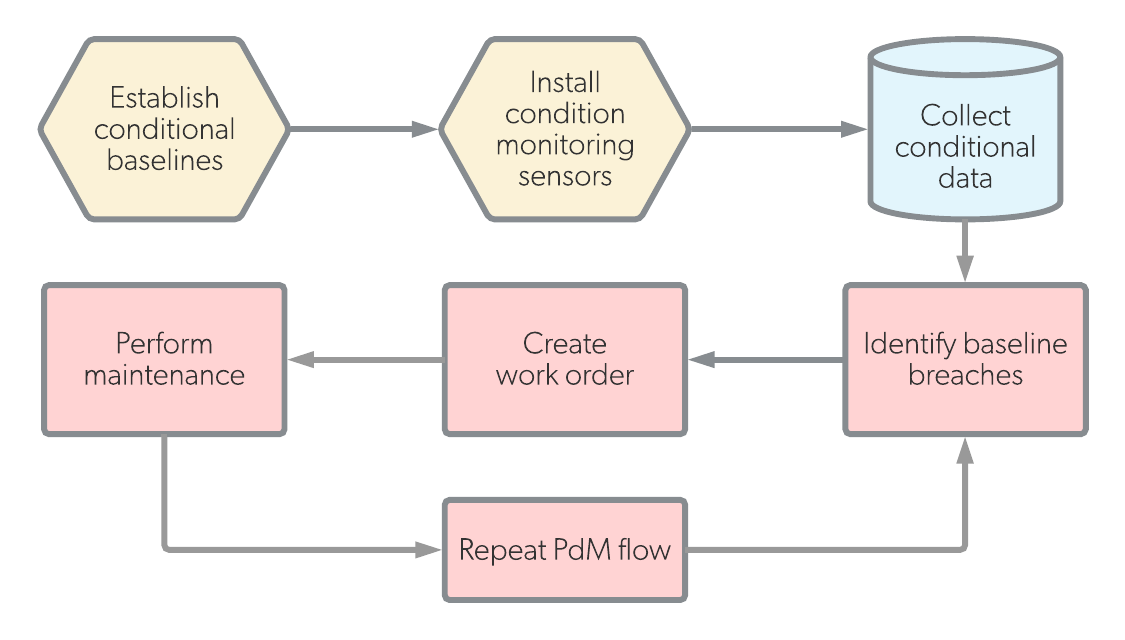
Predictive Maintenance for Manufacturing
An ML-driven predictive maintenance platform that ingests real-time sensor telemetry from factory equipment and flags the early mechanical signatures of failure — before a line goes down.
Time-series signals from 500+ industrial sensors are transformed with domain-specific feature engineering — rolling statistics, spectral and frequency-domain analysis — then scored by an ensemble of Random Forest, XGBoost and LSTM models. The system forecasts likely failures several days ahead, giving maintenance teams a window to intervene on their own schedule instead of reacting to a breakdown.
Streaming ingestion runs through Apache Kafka, serving is exposed via FastAPI, and the whole platform is containerised for repeatable deployment — the operational plumbing that turns a model into a system a plant floor can depend on.
Enterprise AI & Model Performance Monitoring
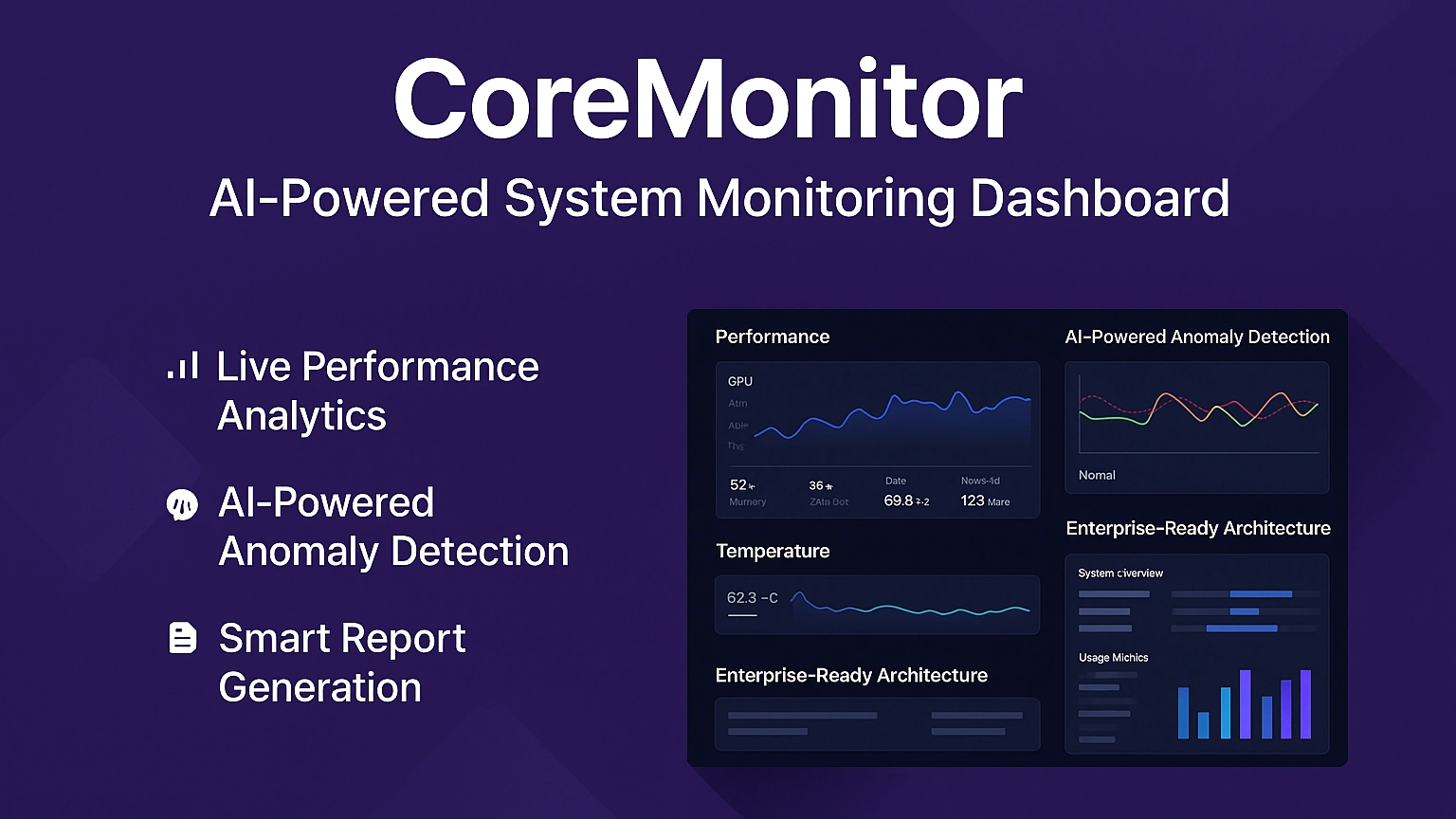
An enterprise monitoring dashboard that gives data and operations teams a single, real-time view of how every deployed model is actually behaving — not how it behaved the day it shipped.
The platform tracks accuracy, precision, recall and F1 alongside prediction-confidence distributions, data-quality checks and model drift, and pairs them with system-performance and operational KPIs. Role-based access keeps sensitive metrics scoped to the right teams while supporting a large concurrent user base, so a slipping model surfaces as an alert rather than a customer complaint.
Built on a React and Node.js front end with a Python and Flask analytics layer, and instrumented end-to-end with Prometheus and Grafana — the observability foundation that keeps ML honest in production.
ML Platform Impact
500+
Industrial Sensors Processed
92%
Prediction Accuracy
40%
Downtime Reduction
10k+
Daily Dashboard Users
Our Approach — How We Deliver ML
A disciplined path from raw data to a model your team trusts on the operations floor — measured every step of the way.
Frame & Baseline
We pin down the decision the model must improve, define the metric that proves it, and establish an honest baseline from your historical data.
Engineer & Model
We build the feature pipeline and evaluate candidate models against a held-out set — shipping the simplest one that clears the accuracy bar.
Serve & Monitor
We deploy behind an API with drift detection, data-quality checks and alerting, so degradation is caught by a dashboard, not a user.
Retrain & Scale
We wire in retraining triggers and cost controls, then expand the pipeline across more equipment, sites or use cases as value is proven.
Machine Learning & Analytics FAQs
How much historical data do we need before ML is worthwhile?
It depends on the problem, but predictive maintenance and forecasting generally need enough history to cover the events you want to predict — ideally several cycles of the failures or seasonal patterns involved. If your data is thin, we’ll say so up front and can start with rules or lightweight statistical models while the dataset matures.
How do you stop a model from silently going stale in production?
Every model we deploy ships with monitoring — we track prediction-confidence distributions, input data drift and live accuracy against ground truth as it arrives. When those metrics cross a threshold, the system alerts and, where appropriate, triggers retraining, so degradation surfaces as an alert rather than a bad decision.
Can our data and models stay inside our own cloud?
Yes. We can run the entire pipeline — training, serving and monitoring — within your VPC or cloud account, with PII masking and audit logging. This is the same privacy-first discipline we applied building ProtectComply’s DPDP-aligned features.
What accuracy can we realistically expect?
We won’t promise a number before seeing your data. We establish a baseline first, then improve against it and report results honestly against a held-out evaluation set — so the accuracy you see reflects real performance, not an over-fit demo.
Do you only do ML, or the full data pipeline too?
The full pipeline. Most of the work in a reliable ML system is the engineering around the model — ingestion, feature stores, streaming, serving and observability. We build that end-to-end so the model has clean, timely data to work with.
Ready to build ML that holds up in production?
Tell us the prediction or decision you want to improve. We’ll tell you honestly whether your data supports it — and exactly how we’d engineer, serve and monitor it.
Book Your Free Consultation